Precision Agriculture Overview
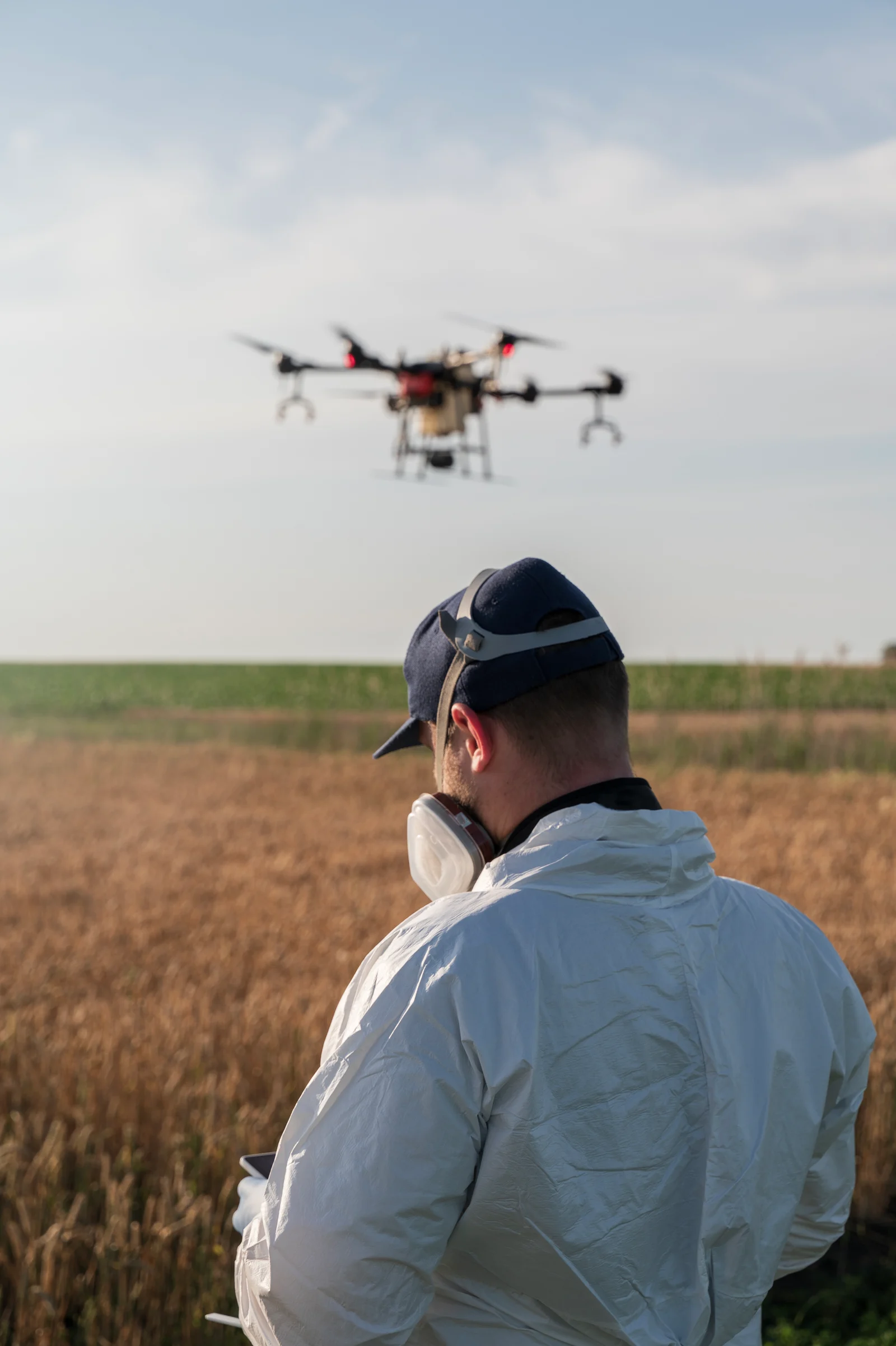
Agricultural spraying drones are designed to apply pesticides, herbicides, fertilizers, and nutrients with high spatial accuracy. Using RTK GPS, terrain-following radar, and AI flight planning, these drones ensure uniform spray distribution while minimizing chemical drift and waste.
Modern spray drones can cover 20–40 hectares per hour, depending on payload and terrain, making them especially valuable during narrow weather windows.
Chemical Spraying Capabilities
Smart agricultural drones carry tanks ranging from 10 to 100 liters and use atomizing nozzles that control droplet size to match crop and chemical requirements. Variable-rate spraying allows differential application based on crop health, pest density, or soil condition, reducing total chemical usage by up to 30–50%.
Benefits Over Traditional Methods
Agriculture Drone Applications
Cereal Crop Spraying (Rice, Wheat, Barley, Oats)
AgriNovix spraying drones are designed for large-area cereal crop protection. Automated flight planning and stable altitude control ensure uniform droplet distribution, improving pest and disease control efficiency while reducing chemical waste.
Foliar Fertilization for Staple Crops
The UAV system supports precise foliar nutrient application at different growth stages. Adjustable spray volume ensures optimal nutrient absorption and promotes balanced, healthy crop development.
Weed Control in Broad Acre Fields
For large-scale farmland, drones provide efficient herbicide application without soil compaction. Accurate spraying minimizes overlap and improves weed control effectiveness.
Irrigated Field Spraying Operations
In irrigated or muddy fields, agricultural drones replace ground machinery. Aerial spraying avoids crop damage and ensures consistent coverage across wet terrain.
Smart Large-Scale Farm Management
Integrated GPS and RTK positioning enable data-driven spraying operations. Farmers can monitor spray records and optimize input usage for sustainable production.
Key Features
High Pressure Atomizing Nozzle
Precise Spray, Even Coverage
Reduce Pesticide Residues
Save Water +90%
Three Working Methods
All-terrain Autonomous Operation, Free Choice
Equipped with High-Precision GPS and IMU Sensors
Work More Accurate and Worry-Free
Advantages of TYI Sprayer Drones
Carbon fiber tube: 40 mm of diameter
2 mm thickness carbon fiber tube
Automatic Agriculture Drone for Fertilizer and Pesticide Spraying
| Specification | Details | Specification | Details |
|---|---|---|---|
| Model NO. | 6-100-197 | Operating Radius | Remote |
| Size | Small | Usage | Agricultural |
| Structure | Unmanned Rotorcraft | Control Mode | Manual / Semi-Autonomous / Fully Autonomous |
| Positioning System | GPS / GNSS / RTK (Optional) | Payload Type | Liquid Spraying / Solid Spreading / Cargo Lifting |
| Protection Level | IP54 / IP56 / IP67 (Optional) | Frame Material | Carbon Fiber + Aviation Aluminum Alloy |
| Folding Structure | Foldable Arms / Quick-Release Modular Design | Battery Type | High-Capacity Lithium Polymer Battery / Smart Batt |
| Application Scenario | Agriculture / Orchard / Greenhouse / Construction | Customization Support | Logo / Payload System / Flight Control Parameters |
| Max Flight Time | 15–25 Min / 25–40 Min | Spraying / Working Width | 4–6 M / 6–8 M / 8–12 M |
| Nozzle Type | Centrifugal Nozzle / High-Pressure Nozzle / Anti-Drift | Flow Rate Control | Intelligent Variable Flow Control |
| Obstacle Avoidance System | Front / Rear / Downward Obstacle Avoidance (Optional) | Wind Resistance Level | Level 5 / Level 6 / Level 7 |
| Transport Package | Box | Specification | 200200300 |
| Trademark | Honest | Origin | China |
| HS Code | 8806219000 | Production Capacity | 35000 Set/Year |
Smart Flight Control
GPS-based route planning and autonomous return.
Long Battery Life
Fast charging & quick battery replacement.
Corrosion-Resistant Frame
Suitable for pesticide and fertilizer liquids.
High-Efficiency Spraying
Covers up to 8–10 hectares per hour.
Agriculture Drone FAQ
We offer crop spraying, crop health monitoring, NDVI mapping, fertilizer application, field surveys, and pest detection.
Coverage depends on the drone model, payload, and field conditions, but agricultural drones can efficiently cover large areas in a short time.
Yes. Precision application helps target specific areas, reducing waste and potentially lowering chemical consumption.
Yes. Using multispectral and thermal sensors, drones can detect water stress, disease outbreaks, nutrient deficiencies, and pest infestations.
Drones are commonly used in crops such as cereals, cotton, vineyards, orchards, sugarcane, vegetables, and plantations.
Most reports can be delivered within 24 to 72 hours after the survey flight.
Start your project with cinematic drone visuals.
Let Sky Shield Drone enhance your industrial operations to be seamless, automated, and efficient with autonomous technologies engineered to serve excellence.